




Tesla Model 3 Brake Upgrades: Why Regen Doesn't Mean You're Covered
Most Model 3 RWD and Long Range owners go a long time without thinking much about their friction brakes, and that's by design. Regenerative braking handles the overwhelming majority of everyday deceleration, which is a genuine efficiency win and part of why the car feels so different to drive than anything with a combustion engine. But that same behavior creates a problem most owners don't find out about until it matters: friction brakes that sit mostly idle develop their own failure modes, and none of them announce themselves until you actually need maximum stopping power, on a mountain descent, in an emergency stop, or on a track day.
This guide is about what's actually different about braking a Model 3 RWD or Long Range hard, why regen changes the calculus rather than eliminating the need for good brakes, and how to pick the right stage of upgrade for how you actually drive.
The Regen Paradox: Brakes That Are Under-Used, Not Over-Used
Every gas car's brake pads and rotors wear down and stay conditioned through repeated use. A Model 3's friction brakes work the opposite way. Because regen handles most stops down to low speed, the friction pads and rotors can go weeks or months without a real bite event, and that under-use creates its own set of problems:
Surface rust builds up on the rotor's braking surface. Iron rotors oxidize when they're not being regularly scrubbed clean by pad contact, and a Model 3 that mostly relies on regen gives rust a lot more uninterrupted time to form than a car braking with friction all day. Owners commonly notice this as a light grinding or shudder on the first hard stop after the car's sat, or as visible rust rings on the rotor face during a wheel-off inspection.
Pad surfaces glaze from light, infrequent contact rather than heat. Ironically, a pad that's rarely asked to do real work can develop a glazed surface just from repeated light contact without the friction events needed to keep the surface fresh, which reduces bite exactly when a driver needs it in an emergency stop.
Caliper pistons see less cycling, which affects seal health over time. Less frequent, lower-force piston movement isn't inherently bad, but it means a sticking caliper or a slow-to-release piston can go unnoticed longer on a Model 3 than on a car where the driver is feeling brake response every single stop.
None of this is a defect in Tesla's engineering: it's an unavoidable tradeoff of a system built to maximize range and pad life through regen. The upgrade path in this guide isn't about fighting that design, it's about making sure the friction system is actually ready the moment you need it at full capability, whether that's a panic stop, a canyon descent, or a track session where regen alone can't do the job.
Why a Model 3 Needs Real Brakes Once You're Actually Using Them
The other half of the story is mass. A Model 3 RWD or Long Range carries a battery pack that puts curb weight meaningfully above a comparably sized gas sedan, often by several hundred pounds. Regen recovers a portion of that kinetic energy on a gradual stop, but regen contribution drops off sharply at low speed and essentially disappears in a hard, fast stop, which means the friction brakes are doing close to the full job of stopping a heavier-than-expected car exactly in the scenario where stopping distance matters most.
This is the same reason Model 3s doing repeated track sessions, even under Tesla's own Track Mode, still run into brake fade faster than their instant torque and quick lap times would suggest. Track Mode manages power delivery and regen blending intelligently, but it can't add thermal mass to an undersized rotor or bite to a pad that's spent its life mostly idle.
The Four Stages, and What Each One Actually Solves
Performance Starter. Front and rear Winmax performance pads, high performance brake fluid, direct OEM caliper fit, starting around $349. This stage replaces the two components most responsible for consistent bite and pedal feel, which directly addresses the glazing and inconsistency that comes from a factory pad that's spent most of its life under-used. No rotor or caliper changes means this is a straightforward swap for a daily-driven car that wants a more confident pedal without any track ambitions yet.
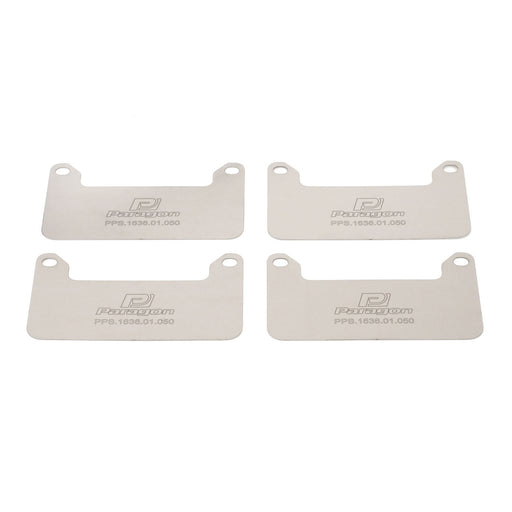
HPDE Ready System. Front and rear Winmax Track pads, race performance brake fluid, front titanium heat shields, guaranteed fitment, starting around $502. This is the right step once actual track time is on the calendar, whether that's a Tesla Track Day event or a general HPDE weekend. Race fluid matters more here than most owners expect: because a Model 3's friction brakes see so little routine use, the fluid inside them has had just as much time to absorb moisture as a gas car's, without the benefit of frequent heat cycling that helps drive moisture out. That makes a Model 3 arguably more exposed to a sudden fluid boil on its first hard track session than a car that brakes hard every day. The titanium heat shields protect the front calipers from radiant pad heat once you're generating real track temperatures for the first time.
Track Ready Pad/Rotor System (Most Popular). Front and rear two-piece rotors, Winmax Track Ready pads, front titanium heat shields, race ready brake fluid, starting around $2,302. This is the package built for a Model 3 owner who's consistently pushing the car hard enough to overwhelm the factory rotors, whether from repeated track sessions or from a heavier AWD Performance variant generating more thermal load per stop. Two-piece rotor construction (an aluminum hat paired with a separate iron friction ring) reduces unsprung mass and lets the ring expand independently under heat, which is the direct answer to a factory rotor that was never sized around sustained hard-braking events in the first place. It's the most popular package because it's the point where a Model 3 stops relying on a system designed around occasional friction contact and starts running hardware built for repeated hard stops.
Complete Big Brake Kit. Front big brake kit in 370mm or 410mm, high performance rear rotors, front titanium heat shields, race ready brake fluid, Winmax Track pads front and rear, starting around $3,894. This is the definitive upgrade for the Model 3 platform: a genuine 6-piston caliper and larger rotor diameter, sized to the vehicle's actual mass rather than to a factory spec built around maximizing regen contribution and pad longevity. It's the right call for drivers running repeated full track weekends, or for AWD Performance variants where the extra weight and power make the factory system's limitations show up fastest.
Track Days Change the Math on a Model 3 More Than Most Owners Expect
If your Model 3 is your first performance-oriented car, it's worth saying plainly: instant torque and a quiet cabin can make a Tesla feel deceptively controlled at speed, right up until you're asking the brakes to do a job they weren't sized for. A gas car driver coming to their first track day usually has some intuition, built from years of feeling their brakes work, about when fade is starting. A Model 3 owner who's relied on regen for most of their braking simply hasn't built that same feel, because the friction brakes have rarely been the thing doing the work. That's not a criticism, it's just a different starting point, and it's exactly why the HPDE Ready System exists as a specific, deliberate step between daily driving and full track use rather than assuming any Model 3 owner can jump straight from stock brakes to a track weekend.
Best Package for How You Actually Drive Your Model 3
Best for a daily-driven Model 3 that mostly relies on regen but wants a more confident pedal: Performance Starter. It solves bite consistency and pedal feel without touching rotors, which is the right scope for a car that isn't seeing sustained hard braking events yet.
Best for a first Tesla Track Day or HPDE weekend: HPDE Ready System. The race fluid addresses a Model 3-specific risk (moisture-laden fluid that's rarely been heat-cycled), and the titanium heat shields protect the calipers the first time you're generating real track heat.
Best for regular track use or an AWD Performance variant carrying extra weight and power: Track Ready Pad/Rotor System. Two-piece rotors solve the thermal mass problem that a factory rotor, sized around regen-assisted daily driving, was never built to handle under repeated hard stops.
Best for serious, repeated track weekends where every other component is already track-ready: Complete Big Brake Kit. A 6-piston front caliper and your choice of 370mm or 410mm rotor give you the thermal and clamping headroom a Model 3's mass actually demands under full track load.
Best single upgrade to check before your first hard-braking event, regardless of stage: A rotor and caliper inspection for surface rust and pad glazing. Because factory friction brakes on a heavily regen-reliant Model 3 see so little routine use, it's worth a visual check before assuming they're ready for a panic stop or a track day, even if the car has low mileage.
FAQ
If regen handles most of my braking, do I really need to upgrade the friction brakes at all?
If your driving stays gentle and gradual, the factory system will likely serve you fine for a long time. The friction brakes matter most in the exact moments regen can't help: hard, fast stops, low-speed emergency braking where regen contribution drops off, and any sustained hard use like a mountain descent or track session. If any of those describe your driving, the factory system is worth a real look.
Why would my brake fluid need attention if I barely use my brakes?
Brake fluid absorbs moisture from the atmosphere over time regardless of how often the brakes are actually used, and that moisture lowers the fluid's boiling point. A car that brakes hard often tends to cycle fresh heat through the system, which can help, while a Model 3 relying mostly on regen doesn't get that benefit, so the fluid can be just as compromised, or more, despite lower brake usage.
Is rotor rust actually a real problem, or is that overstated?
It's a documented, common experience among Model 3 owners, especially in wetter or more humid climates, and it's a direct consequence of how little the friction pads contact the rotor surface during normal regen-heavy driving. Mild surface rust that clears after a few real stops is normal and not usually a concern; persistent grinding, pulsation, or visible pitting is worth having inspected.
Does Tesla's Track Mode make the factory brakes track-safe on its own?
Track Mode manages power delivery, cooling, and regen/friction blending intelligently, which helps, but it doesn't change the physical size of the factory rotor or the friction limits of the factory pad. Owners doing repeated track sessions still commonly hit fade sooner than the car's straight-line performance would suggest, which is exactly the gap the Track Ready and Big Brake Kit stages are built to close.
Will a Paragon big brake kit fit behind my factory Model 3 wheels?
Fitment is filtered by caliper platform (PA035) and rotor diameter (378mm or 410mm) so clearance can be confirmed against your specific wheel before ordering. This matters more on a Model 3 than on some platforms because aero wheel covers and factory wheel designs vary enough between trims that it's worth confirming rather than assuming.
Is there a difference in what I should buy for a Model 3 RWD versus a Model 3 AWD Performance?
Yes. The heavier, more powerful AWD Performance variant generates more kinetic energy per stop and is more likely to benefit from the larger rotor options and the Track Ready or Big Brake Kit stages sooner than a lighter RWD car doing similar driving. Rotor and pad part numbers are also specific to caliper and rotor size across the lineup, so confirming your exact trim before ordering avoids a fitment mismatch.
Not sure which stage matches your Model 3 and how you actually drive it? Contact us at (630) 360-2548 or sales@alconkits.com and we'll help you spec the right setup before you order.